
How long does it take to charge an electric vehicle? Can you charge it at home overnight? Do fast chargers really charge a car that quickly? These are common questions many people ask before buying an electric car.
The good news is that charging an EV is easy. However, not all electric vehicles charge at the same speed. Some can charge in a few hours, while others may take longer.
The charging time depends on a few simple things, such as the battery size, the type of charger, and how much charge is already in the battery.
In this guide, you will learn how long it takes to charge an electric vehicle, what affects charging time, and how home charging and public charging compare. You will also learn how different chargers can affect your driving range.
How Long Does It Take to Charge Electric Vehicles?
Most electric vehicles take about 4 to 12 hours to fully charge. The exact time depends on the battery size, the type of charger, and how much charge is left in the battery.
In most cases, home charging takes several hours. A fast charging station can charge many EVs to 80% in about 20 to 60 minutes.
Some EVs can be charged overnight, while others can add a useful driving range in less than an hour. In general, a larger battery takes longer to charge than a smaller one.
EV Charging Time Comparison Table:
The time needed to charge an electric vehicle can be different for every car. It depends on the battery, the type of charger, and how fast the vehicle can accept a charge.
| Charging Type | Typical Charging Time | Best For |
|---|---|---|
| Level 1 (120V) | 20–40 hours | Overnight home charging with low daily mileage |
| Level 2 (240V) | 4–10 hours | Daily home charging and workplace charging |
| DC Fast Charging | 20–60 minutes (up to 80%) | Long trips and quick charging on the go |
| Ultra Fast Charging | 10–30 minutes for most of the battery | Getting back on the road as quickly as possible |
These times are only estimates. The actual charging time can be shorter or longer depending on the vehicle and battery size.
In most cases, Level 2 charging is the most popular choice for home charging. It is much faster than Level 1 charging and works well for daily use.
If you need to charge quickly during a trip, DC fast charging can add a large amount of battery power in a short time.
What Affects EV Charging Time?
Not all electric vehicles charge at the same speed. Some can charge much faster than others. The charging time depends on several factors, including the battery size, charger, and the condition of the battery.
Battery Size
A larger battery usually takes longer to charge than a smaller one. For example, an electric vehicle with a large battery may need more time to reach a full charge because it stores more energy.
Charger Type
The type of charger also affects charging time. A basic home charger is slower, while a fast charging station can charge an EV much more quickly.
Charger Power (kW)
Some chargers can deliver more power than others. Chargers with a higher kilowatt (kW) rating can charge a vehicle faster. In most cases, more power means less waiting time.
Current Battery Level
The amount of charge already in the battery also matters. A nearly empty battery will take longer to charge than one that is already partly charged.
Temperature and Weather
Very hot or very cold weather can slow down charging. Batteries usually charge best in mild temperatures, which can help improve charging efficiency.
Vehicle Charging Capability
Every electric vehicle has a limit on how fast it can charge. Even if you use a powerful charging station, the vehicle may only accept a certain amount of power. This is why two EVs can have different charging times even when using the same charger.
How Long Does It Take to Charge an Electric Vehicle at Home?
Many EV owners charge their electric vehicle at home because it is simple and convenient. In most cases, the charging time can range from a few hours to overnight, depending on the type of charger and the battery size.
Level 1 Charging
Level 1 charging uses a standard household outlet. It is the slowest way to charge an EV.
Most electric vehicles need about 20 to 40 hours or more to fully charge with Level 1 charging. Because it is slow, it is often best for drivers who travel short distances each day and can leave their vehicle plugged in for a long time.
Level 2 Charging
Level 2 charging is much faster and is the most popular option for home charging.
Most EVs can fully charge in about 4 to 12 hours with a Level 2 charger. The exact time depends on the battery size and the vehicle’s charging capability.
Many drivers charge their EV overnight and wake up to a full battery. This makes Level 2 charging a practical choice for everyday use.
How Long Does It Take to Charge an Electric Vehicle at a Public Charging Station?
Public charging is a good option when you are away from home or need to charge during a trip. The charging time depends on the type of charging station you use.
Public AC Charging
Public AC chargers are commonly found in parking lots, shopping centers, and workplaces.
These chargers are usually faster than a standard home outlet but slower than a DC fast charging station. Most EVs can take several hours to fully charge using a public AC charger.
They are a good choice when you plan to leave your electric vehicle parked for a while.
DC Fast Charging
DC fast charging is one of the fastest ways to charge an EV.
Many electric vehicles can charge from 20% to 80% in about 20 to 60 minutes. The exact charging time depends on the battery size, the charging speed, and the vehicle’s charging capability.
DC fast chargers are often found along highways and major travel routes. They are useful when you need to add more driving range quickly.
Ultra Fast Charging
Ultra fast charging is even faster than standard DC fast charging. Some modern EVs can gain a large amount of charge in as little as 10 to 30 minutes.
However, not all electric vehicles can use the highest charging speeds. The actual charging time depends on the vehicle and the charger being used.
For drivers who travel long distances, ultra fast charging can help reduce waiting time and make road trips more convenient.
Level 1 vs Level 2 vs DC Fast Charging
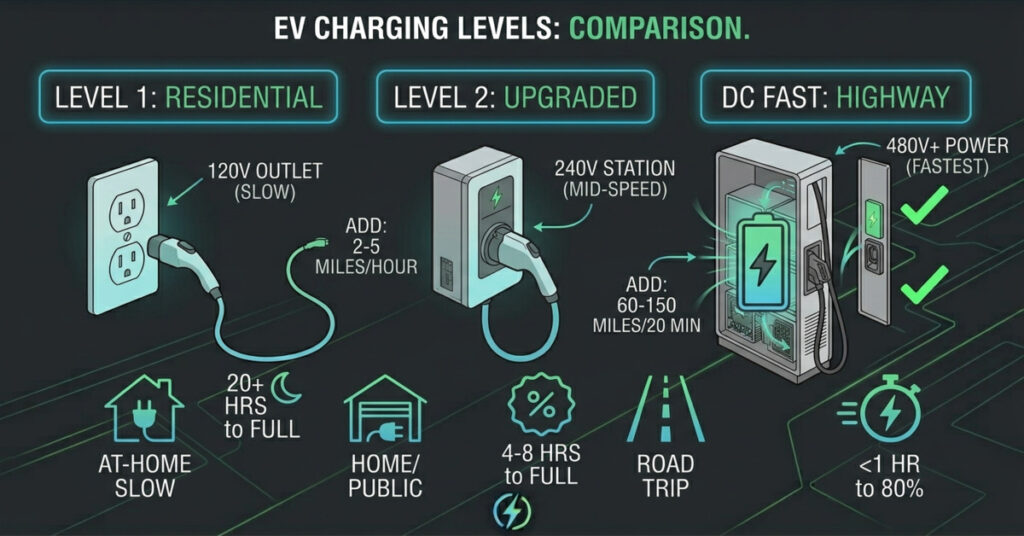
Not all EV chargers work at the same speed. Some take many hours to charge an electric vehicle, while others can add a large amount of charge in less than an hour.
Level 1 Charging Time
Level 1 charging uses a standard wall outlet found in most homes. It is the slowest charging option.
Most electric vehicles take about 20 to 40 hours or more to fully charge with Level 1 charging. It is best for drivers who do not drive long distances every day and can leave their vehicle plugged in overnight or longer.
Level 2 Charging Time
Level 2 charging is much faster than Level 1 charging. It is commonly used for home charging, workplaces, and public charging locations.
Most EVs can fully charge in about 4 to 12 hours with a Level 2 charger. This makes it a popular choice for daily charging because it offers a good balance between speed and convenience.
Level 3 (DC Fast) Charging Time
DC fast charging is the fastest charging option available for most electric vehicles.
Many EVs can charge from 20% to 80% in about 20 to 60 minutes. This makes DC fast charging a great option for long trips when drivers need to add more driving range quickly.
Which Charging Option Is Best?
The best option depends on your needs. Level 1 charging works well if you have plenty of time. Level 2 charging is ideal for everyday use. DC fast charging is best when you need a quick charge while traveling.
For most drivers, Level 2 charging offers the best mix of convenience, cost, and charging speed.
How Much Range Does Charging Add?
One of the most common questions EV owners ask is how much driving range they can get while charging. The answer depends on the charger, the battery, and the charging speed of the electric vehicle.
Range Added Per Hour of Charging
The amount of range added each hour can vary from one EV to another.
With Level 1 charging, most electric vehicles gain a small amount of driving range each hour. Level 2 charging adds range much faster and is a popular choice for home charging.
In many cases, a few hours of Level 2 charging can provide enough range for daily driving.
Fast Charging Range Gains
DC fast charging can add a large amount of driving range in a short time. Many EVs can gain hundreds of kilometers of range in less than an hour.
This makes fast charging useful during long trips when drivers need to get back on the road quickly.
The exact amount of range added depends on the battery size, charging speed, and the vehicle being charged.
Why Range Added Can Vary
Not all electric vehicles charge at the same speed. A larger battery may need more time to charge, while some EVs are designed to accept power faster than others.
Because of these differences, two vehicles using the same charging station may gain a different amount of driving range during the same charging session.
Why Do Some EVs Charge Faster Than Others?
Not all electric vehicles charge at the same speed. Some EVs can charge much faster than others, even when using the same charging station. This happens because several factors affect how quickly a vehicle can accept power.
Battery Capacity
The size of the battery plays a big role in charging time. A larger battery can store more energy, but it usually takes longer to fill than a smaller one.
This is why two electric vehicles can have different charging times, even when using the same charger.
Onboard Charger
Every EV has an onboard charger that helps manage how power enters the battery. Some vehicles have more powerful onboard chargers, which can help reduce charging time.
Because of this, two EVs connected to the same charger may not charge at the same speed.
Charging Efficiency
Not all of the electricity sent to a vehicle reaches the battery. A small amount of power is lost during charging.
Vehicles with better charging efficiency can make better use of the electricity they receive, which can help improve charging performance.
Battery Management System (BMS)
A battery management system (BMS) helps protect the battery and keep it working properly. It controls how the battery charges and helps prevent damage.
The BMS may slow charging in certain situations to protect the battery. While this can increase charging time, it helps support long-term battery health.
Why Charging Times Can Be Different
Even if two EVs use the same fast charging station, they may not charge at the same speed. The battery size, onboard charger, charging efficiency, and battery management system (BMS) all play a role.
That is why charging times can vary from one electric vehicle to another.
How to Calculate EV Charging Time
If you know a few basic details, you can get a rough idea of how long it will take to charge an electric vehicle. While the exact charging time may vary, a simple calculation can help you estimate it.
Simple EV Charging Formula
A simple way to estimate charging time is:
Battery Size (kWh) ÷ Charger Power (kW) = Estimated Charging Time
For example, if an EV has a battery capacity of 60 kWh and uses a 10 kW charger:
60 ÷ 10 = 6 hours
This means the vehicle may take about 6 hours to charge from empty to full.
Example EV Charging Calculation
Let’s say an electric vehicle has a 75 kWh battery and is connected to a 7 kW charger.
75 ÷ 7 = about 11 hours
In this case, the EV may need around 11 hours for a full charge.
Keep in mind that this is only an estimate. The actual charging time can be affected by the battery level, weather conditions, and the vehicle’s charging capability.
Why Charging Time Can Vary
The formula gives a general estimate, but real-world charging times are often different.
Factors such as the battery size, charger power, temperature, and charging speed can affect how quickly an EV charges. This is why some vehicles may charge faster or slower than expected.
Does Fast Charging Affect Battery Life?
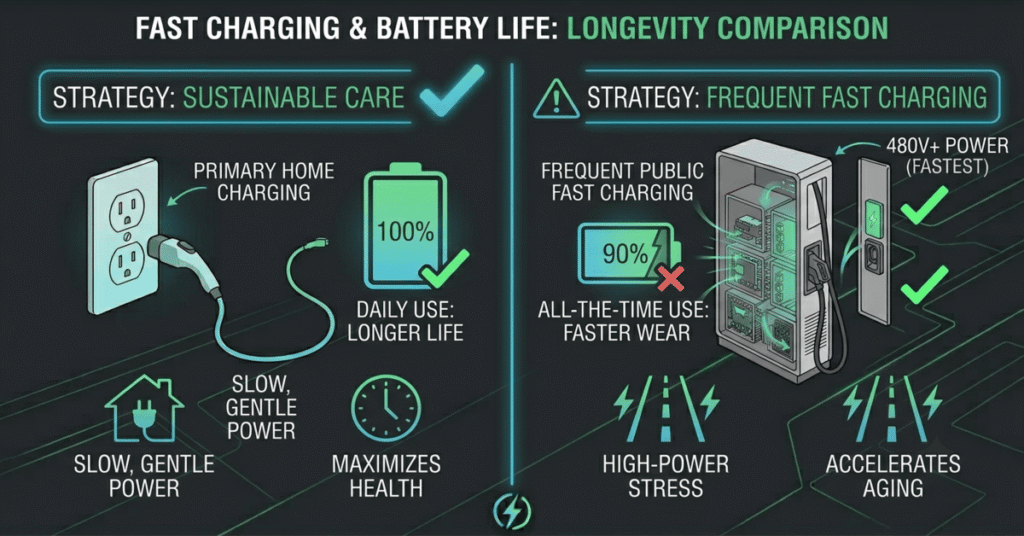
For most electric vehicles, fast charging is safe. Modern EV batteries are built to handle DC fast charging without problems.
Using fast charging sometimes will not harm the battery. However, using it all the time may cause the battery to wear out a little faster over many years.
Many drivers use home charging for daily charging and save fast charging for long trips. This helps keep the battery in good condition while still giving drivers a quick way to charge when needed.
Tips to Reduce EV Charging Time
If you want to spend less time charging your electric vehicle, a few simple steps can help.
Charge at the Right Battery Level
Many EVs charge faster when the battery is low. Charging from a very low battery level can often be quicker than charging the last few percent to reach a full charge.
Use a Faster Charger
The type of charger you use makes a big difference. Level 2 charging is much faster than Level 1 charging, while DC fast charging can provide the quickest charging times for many electric vehicles.
Avoid Extreme Temperatures
Very hot or very cold weather can slow down charging. When possible, park your EV in a garage or shaded area to help the battery stay at a moderate temperature.
Plan Charging Ahead
If you know you will need extra driving range, try charging before the battery gets too low. This can make charging more convenient and help you avoid unnecessary delays.
By using the right charging station and following these simple tips, you can reduce charging time and get back on the road sooner.
Common EV Charging Mistakes to Avoid
Some people make simple mistakes when charging an electric vehicle. They may wait until the battery is almost empty or forget to charge before a long trip. Some also use a slow charger when they need a faster charge.
These mistakes can make charging take longer. Planning ahead and charging your EV on time can help you save time and avoid problems on the road.
Pros and Cons of Different EV Charging Methods
| Charging Method | Pros | Cons |
| Level 1 Charging | Simple to use at home | Very slow charging |
| Level 2 Charging | Good for everyday charging | May cost money to set up at home |
| DC Fast Charging | Charges the battery quickly | Often costs more than home charging |
| Ultra Fast Charging | Very fast charging | Not available in all places |
The best option depends on your needs. Many EV owners use Level 2 charging at home and use DC fast charging when they need a quick charge during a trip.
Final Verdict: How Long Does It Take to Charge Electric Vehicles?
Most electric vehicles take about 4 to 12 hours to fully charge at home. A fast charger can charge many EVs to 80% in about 20 to 60 minutes. The exact charging time depends on the battery size, the charger, and how much charge is left in the battery.
For most people, charging an EV overnight at home is enough for daily driving. If you are on a long trip, a public charging station can help you charge faster and get back on the road sooner.
FAQ on How Long Does It Take to Charge Electric Vehicles?
Q: How long do EV cars take to fully charge?
Most EVs take about 4 to 12 hours to fully charge, depending on the battery and charger.
Q: What happens if you don’t drive your electric car for 2 weeks?
Your EV will usually be fine and may only lose a small amount of battery charge.
Q: How fast is it to charge an electric car?
Fast chargers can charge many EVs to 80% in about 20 to 60 minutes.
Q: How much time does it take to charge an electric car?
Charging can take anywhere from 20 minutes to over 12 hours.
Q: How much does it cost to charge an electric car to 100%?
The cost depends on electricity prices and battery size.
Q: Can you push an electric car if it runs out of battery?
Yes, but you should follow the vehicle maker’s instructions.