
Have you ever wondered what happens when you press the brakes in a car? Most people think the car just slows down and stops. But something else happens too. In many cars, a lot of energy is lost every time the brakes are used.
Electric vehicles are different. They use a smart feature called regenerative braking. Instead of wasting energy, the regenerative braking system saves some of it and sends it back to the battery pack. This stored energy can be used again later.
Think of it like charging your phone with power that would normally be thrown away. By saving and reusing electricity, electric vehicles can make better use of the power they already have. This means the vehicle can often travel farther before it needs to be charged again.
Another advantage is that the brakes do not have to work as hard all the time. This can help them last longer and reduce wear over time. The energy recovery process also improves vehicle efficiency, helping the vehicle use its power in a smarter way.
What Is Regenerative Braking in Electric Vehicles?
Regenerative braking is a system that helps electric vehicles save energy when they slow down. Instead of letting that energy go to waste, the vehicle sends it back to the battery pack.
This helps improve vehicle efficiency, supports energy recovery, and can help the vehicle travel farther on a single charge.
How Does Regenerative Braking Work in Electric Vehicles?
Regenerative braking helps an electric vehicle save energy. When the vehicle slows down, it saves some energy instead of wasting it.
When you take your foot off the accelerator or press the brake pedal, the regenerative braking system starts working.
The electric motor helps capture some of the energy from the moving vehicle. That energy is turned into electricity.
The electricity is then sent to the battery pack. The battery stores it so it can be used again later.
This process is called energy recovery. It helps the vehicle make better use of its power.
It can also improve vehicle efficiency and help the vehicle travel farther on a charge.
In simple words, regenerative braking saves energy and sends it back to the battery instead of letting it go to waste. This is some basic, sample markdown.
Why Do Electric Vehicles Use Regenerative Braking?
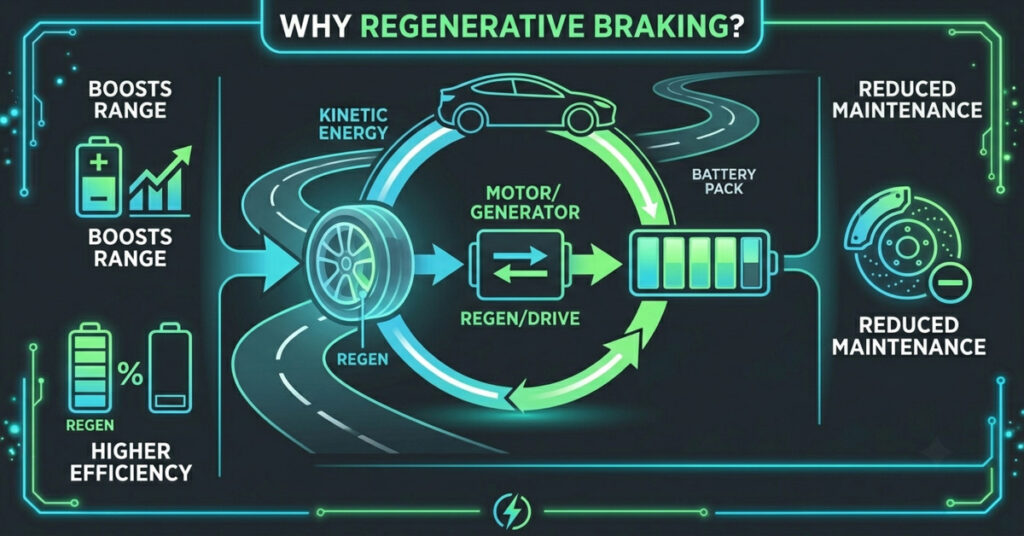
Electric vehicles use regenerative braking to save energy. When the vehicle slows down, the system saves some of that energy instead of letting it go to waste.
The regenerative braking system sends the saved energy back to the battery pack. The battery can then use that energy later.
This process is called energy recovery. It helps the vehicle make better use of its power.
It can also improve vehicle efficiency and help the vehicle go farther on a charge.
Another benefit is that the brakes do not have to work as hard. This can help them last longer.
In simple words, regenerative braking helps electric vehicles save energy, use less power, and get more from every charge.
Regenerative Braking vs Traditional Braking: What’s the Difference?
Both regenerative braking and traditional braking help a vehicle slow down. The difference is that regenerative braking saves some energy, while traditional braking does not.
| Feature | Regenerative Braking | Traditional Braking |
| What it does | Slows the vehicle and saves energy | Slows the vehicle |
| Energy use | Saves some energy and sends it to the battery | Energy is lost |
| Battery | Helps add power back to the battery | Does not help the battery |
| Brake life | Can help brakes last longer | Brakes wear out faster |
| Driving range | May help the vehicle go farther | Does not increase range |
| Where it is used | Electric vehicles and hybrids | Most vehicles |
To understand the difference, think about riding a bicycle. When you use the brakes, the bicycle slows down, but the energy from its movement is gone. The same thing happens in a vehicle with traditional brakes.
In a regular car, the brakes slow the wheels and stop the vehicle. During this process, the energy from the vehicle’s movement is lost. It cannot be used again. Electric vehicles are different. They use a regenerative braking system that can save some of this energy.
Instead of letting it go to waste, the system sends it back to the battery pack. This saved energy can be used later to help power the vehicle. This process is called energy recovery. It helps electric vehicles make better use of their electricity and improves vehicle efficiency.
Another advantage is that the brakes do not have to work as hard all the time. This can help them last longer and reduce wear over time. In simple words, traditional brakes only help a vehicle stop. Regenerative braking helps a vehicle stop and saves energy at the same time. That is why it is such an important feature in modern electric vehicles.
What Happens to the Energy Recovered During Braking?
The energy saved during braking does not go to waste. Instead, it is sent back to the battery, where it can be used again later. When an electric vehicle slows down, the regenerative braking system captures some of the energy that would normally be lost.
The electric motor helps turn that energy into electricity. The electricity is then sent to the battery pack and stored there. This is part of the vehicle’s battery charging process. You can think of it like saving leftover power for later.
Instead of throwing energy away, the vehicle keeps some of it and uses it again when needed. This energy recovery process helps the vehicle make better use of its power. It also improves vehicle efficiency and can help the vehicle travel farther on a single charge.
Benefits of Regenerative Braking in Electric Vehicles
Regenerative braking helps electric vehicles save energy. It sends some of that energy back to the battery, which helps the vehicle make better use of every charge.
Longer Driving Range
Every time the vehicle slows down, the regenerative braking system saves a small amount of energy. That energy is sent back to the battery pack and can be used later. This may help the vehicle travel farther before it needs to be charged again.
Less Wear on the Brakes
The system helps slow the vehicle, so the regular brakes are not used as much. This means the brake pads may last longer and wear out more slowly.
Better Use of Battery Power
Instead of losing energy, the vehicle saves some of it through energy recovery. This helps improve vehicle efficiency and makes better use of the electricity already stored in the battery.
Lower Maintenance Costs
When the brakes last longer, they do not need to be replaced as often. This can help reduce maintenance costs over time.
More Value From Every Charge
One of the biggest benefits of regenerative braking is that it helps the vehicle get more from every charge. By saving energy that would normally be lost, the vehicle can use its power in a smarter way.
Limitations of Regenerative Braking
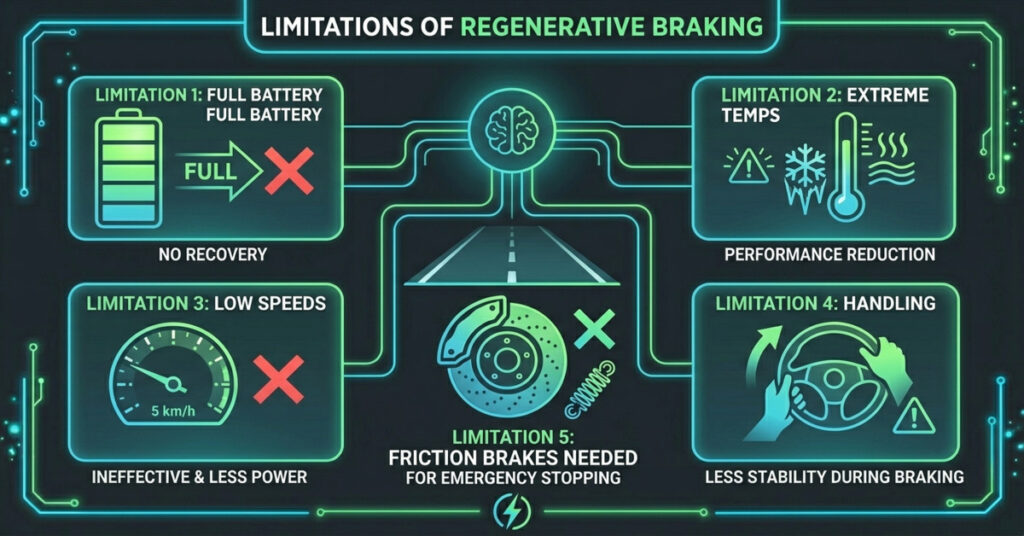
Regenerative braking offers many benefits, but it is not perfect. There are some situations where it may not work as well, which is why electric vehicles still use regular brakes.
Less Effective at Low Speeds The regenerative braking system works best when the vehicle is moving at a higher speed. As the vehicle slows down, the amount of energy it can recover becomes smaller. This means less energy recovery at very low speeds.
A Full Battery Can Limit Energy Recovery
The battery pack stores the energy saved during braking. However, if the battery is already close to full, there may not be much room to store extra energy. In that case, the vehicle cannot save as much energy as usual.
Regular Brakes Are Still Needed
Even though regenerative braking helps slow the vehicle, it cannot do everything on its own. Electric vehicles still use regular brakes when quick or strong braking is needed. These brakes help keep the vehicle safe in different driving conditions.
The Brakes May Feel Different
Some drivers notice that braking feels different in an EV. This is because the vehicle is slowing down using both the regenerative braking system and regular brakes. Most drivers get used to this feeling after a short time.
Cold Weather Can Affect Performance
Very cold temperatures can affect how well the battery works. When this happens, the vehicle may not be able to save as much energy during braking. This can slightly reduce vehicle efficiency until the battery warms up.
In simple terms, regenerative braking is a useful feature, but it has some limits. That is why electric vehicles combine it with regular brakes to provide safe and reliable stopping power.
Does Regenerative Braking Charge the Battery?
Yes, regenerative braking can put some power back into the battery. When an electric vehicle slows down, it saves some energy instead of wasting it. When the vehicle slows down, the regenerative braking system starts working. It captures some of the energy from the moving vehicle. The system then turns that energy into electricity.
The electricity is sent to the battery pack, where it is stored for later use. Think of it like saving money in a piggy bank. Instead of throwing energy away, the vehicle saves some of it for later.
This type of energy recovery helps the vehicle make better use of its power. It can also improve vehicle efficiency and help the battery last longer between charges.
However, regenerative braking cannot fully charge the battery. It only adds a small amount of power while you drive.
How Much Energy Can Be Recovered?
The amount of energy saved depends on how you drive. If you drive in city traffic, the vehicle slows down more often.
This gives the system more chances to save energy. In simple terms, regenerative braking saves a little energy each time the vehicle slows down.
Over time, those small amounts can help the vehicle travel farther on a charge.
How Different EVs Use Regenerative Braking
Most electric and hybrid vehicles use regenerative braking, but they do not all use it in the same way. The main difference is how the saved energy is used after it is sent back to the battery.
Battery Electric Vehicles (BEVs)
A battery electric vehicle runs only on electricity. When the regenerative braking system saves energy, it sends it back to the battery pack. The vehicle can then use that saved power later for driving. This helps improve vehicle efficiency and may increase driving range.
Hybrid Electric Vehicles (HEVs)
A hybrid electric vehicle uses both a gasoline engine and an electric system. Like EVs, hybrids also use energy recovery during braking. However, the saved energy is mainly used to support the electric side of the vehicle. This helps reduce fuel use and improve overall efficiency.
Plug-in Hybrid Vehicles (PHEVs)
A plug-in hybrid works like a hybrid but has a larger battery that can be charged from an outlet. It also uses regenerative braking to save energy while driving.
The recovered energy is stored in the battery and can help power the vehicle later. In simple terms, all three types of vehicles use regenerative braking. The difference is how they store and use the energy that is recovered.
Factors That Affect Regenerative Braking Performance
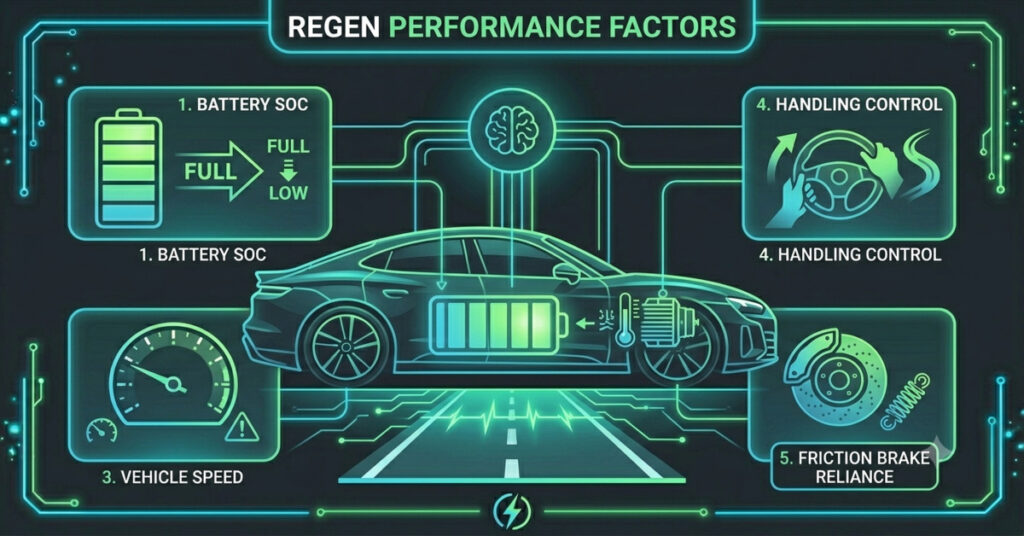
Regenerative braking does not work the same way all the time. A few things can affect how much energy the system can save.
Driving Speed
The vehicle can usually save more energy when it is moving faster. When the vehicle is moving slowly, the regenerative braking system may save less energy.
Battery Level
The battery pack needs space to store energy. If the battery is almost full, the vehicle may not be able to save as much energy.
Weather
Cold weather can affect how the battery works. This may reduce energy recovery until the battery warms up.
Driving Conditions
City driving often involves more stopping and slowing down. This gives regenerative braking more chances to save energy.
In simple terms, speed, battery level, weather, and traffic can all affect how much energy an electric vehicle can recover. These factors can also affect vehicle efficiency.
What Is One-Pedal Driving and How Does It Work?
One-pedal driving is a feature in many electric vehicles. When you lift your foot off the accelerator, the vehicle starts to slow down.
This means you do not need to use the brake pedal as often. In a regular car, you press the brake pedal when you want to slow down.
In an EV, lifting your foot off the accelerator can also slow the vehicle. As the vehicle slows down, the regenerative braking system helps save energy. Some of that energy goes back to the battery pack. The saved energy can be used later.
This helps with energy recovery and makes better use of the vehicle’s power. Many drivers find this feature easy to use. It can make driving feel smoother, especially in busy traffic.
In simple words, one-pedal driving helps the vehicle slow down, saves energy, and reduces the need to press the brake pedal.
Common Myths About Regenerative Braking
Common Myths About Regenerative Braking Some people have the wrong idea about regenerative braking.
Here are a few common myths and the facts behind them.
Myth: Regenerative Braking Fully Charges the Battery
This is not true. Regenerative braking can send some power back to the battery pack, but it cannot fully charge the battery.
Myth: Electric Vehicles Do Not Need Regular Brakes
This is also false. The regenerative braking system helps slow the vehicle, but regular brakes are still needed for fast stops and emergencies.
Myth: It Is Bad for the Battery
No. Electric vehicles are built to handle energy recovery safely. The battery is designed to store this energy.
Myth: It Always Works the Same Way
Not always. The amount of energy saved can change based on speed, traffic, weather, and battery level. In simple words, regenerative braking is a safe feature that helps save energy and improve vehicle efficiency.
Final Thoughts: What is Regenerative Braking in Electric Vehicles?
Regenerative braking is a simple way for electric vehicles to save energy. When the vehicle slows down, the system saves some of that energy instead of letting it go to waste. Some of the saved energy goes back to the battery pack. This helps the vehicle use its power in a smarter way.
The regenerative braking system can also help improve vehicle efficiency and support energy recovery while you drive. Another benefit is that the regular brakes are used less often. This can help them last longer.
In simple terms, regenerative braking helps electric vehicles save energy, make better use of battery power, and get more from every charge.
FAQ: What Is Regenerative Braking in Electric Vehicles?
Q: Should I use regenerative braking all the time?
Yes. It helps save energy and can reduce wear on the brakes.
Q: Is regenerative braking AC or DC?
The energy is stored in the battery as DC power.
Q: Which motor is not suitable for regenerative braking?
Some older motors do not support regenerative braking.
Q: Do all EV cars have regenerative braking?
Most electric vehicles have regenerative braking, but the system may work differently from one model to another.
Q: How long do regenerative brakes last?
They can help brake pads last much longer than in many regular cars.
Q: Does regenerative braking charge a battery?
Yes. It sends some energy back to the battery when the vehicle slows down.