
Have you ever thought about how electric vehicles really work? Are they always better than regular cars? Can they take you on long trips without problems?
And what happens when the battery gets old? These are simple questions many people ask before buying an electric car. Electric vehicles are becoming more popular around the world. People like them because they use electricity instead of fuel, make less noise, and help reduce pollution.
They also cost less to run in many cases. Because of this, many people believe electric cars are the future. But electric vehicles are not perfect. They also have some disadvantages.
Charging takes more time than filling a fuel tank. Some places do not have enough charging stations, and weak charging infrastructure can cause problems.
The EV battery, especially the lithium-ion battery, can be expensive and may lose performance over time due to battery degradation.
In this article, we will explain these issues in a very simple way so you can easily understand them.
What Are the Disadvantages of Electric Vehicles?
Electric vehicles have some clear disadvantages. Many electric cars cannot travel very far on one charge, so the driving range (vehicle range) is limited compared to petrol cars. They also take a long time to charge.
In many places, charging infrastructure is still weak. This means a charging station may not be easy to find when you need it. The EV battery is also expensive.
Over time, it can lose strength because of battery degradation, which reduces how far the car can go. Because of these issues, electric cars are not always the best choice for every driver, especially for long trips or areas with fewer chargers.
1. Limited Driving Range
One big problem with electric vehicles is driving range (vehicle range). Most electric cars cannot travel as far as petrol cars on one charge. This happens because the EV battery can only store a limited amount of power. Even with better lithium-ion battery technology, the range is still not enough for many long trips.
Why EV range is a problem for long trips
On long trips, drivers may need to stop at a charging station to charge the car. This can slow down travel. In many places, charging infrastructure is still not strong, so finding a charger is not always easy.
How range anxiety affects drivers
Many people also feel range anxiety. This means they worry about running out of battery before reaching a charging station. This can make driving stressful, especially in new places. Over time, battery degradation can also reduce the range, and drivers may later think about battery replacement.
2. Long Charging Times
Another big problem with electric vehicles is long charging time. Unlike petrol cars, electric cars cannot be refueled in a few minutes. Charging depends on the EV battery and the type of charger used. Even with modern lithium-ion battery systems, charging still takes time.
Fast charging vs home charging
There are two main ways to charge an electric car. Home charging is slow and can take many hours. Public fast charging at a charging station is quicker, but it still takes much longer than filling a fuel tank. Some charging infrastructure supports fast charging, but it is not available everywhere.
Why charging feels slow
Charging takes time because electricity must slowly fill the EV battery. This is different from petrol cars, which refill very quickly. Because of this, long trips need more planning.
In some cases, frequent charging can also affect battery degradation, which may reduce performance over time. This is why some drivers think about long-term battery replacement costs.
3. Charging Infrastructure Is Still Developing
One big problem for electric vehicles is weak charging infrastructure in many places. Electric cars are becoming more common, but charging systems are still not fully ready.
Lack of charging stations in many areas
In cities, charging stations are slowly increasing. But in rural areas, they are still very limited. This makes it harder to use electric vehicles for long trips. A good charging infrastructure is important so drivers can easily find power when needed. Without it, travel becomes difficult.
Problems during busy times
Even where charging stations are available, they can get crowded. Many electric cars may need charging at the same time. This causes waiting time. Drivers may have to wait longer to charge their EV battery. This can also increase range anxiety because people are not sure if they will find a free charger quickly.
4. High Battery Replacement Costs
One major concern with electric vehicles is the cost of battery replacement. The EV battery is the most expensive part of electric cars.
Why EV batteries are expensive
An electric car uses a special lithium-ion battery to store energy. These batteries are costly to make. They use rare materials and advanced technology. Because of this, replacing an EV battery can cost a lot of money. In some cases, it can feel almost like buying a used car.
Battery lifespan and wear
Over time, every EV battery becomes weaker. This process is called battery degradation. It means the battery cannot hold as much power as before. When this happens, the driving range (vehicle range) becomes shorter.
Drivers may also feel range anxiety because the car cannot travel as far as before. In serious cases, full battery replacement may be needed, which increases long-term ownership cost.
5. Higher Upfront Purchase Price
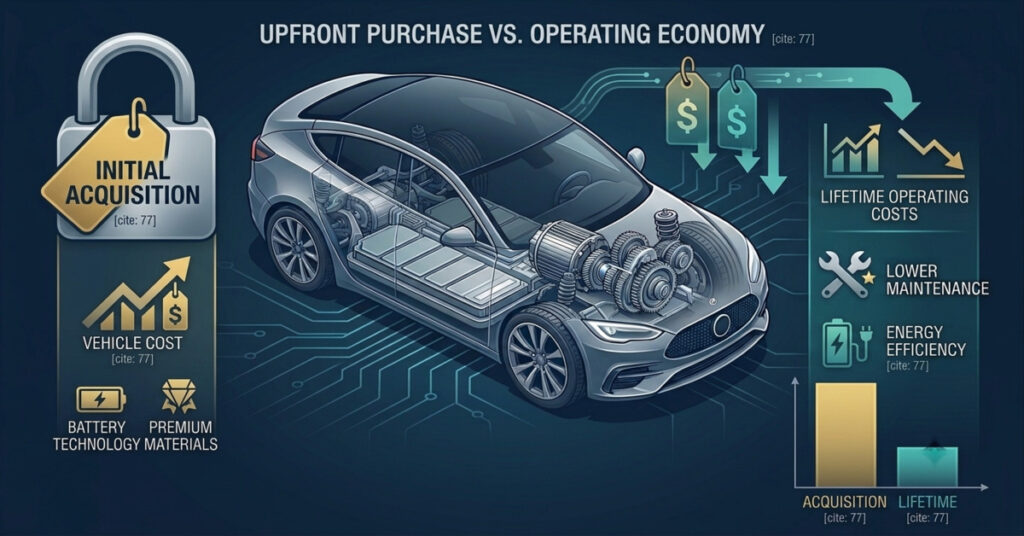
Another disadvantage of electric vehicles is their high buying cost. Most electric cars cost more than petrol cars at the start.
Why electric cars cost more
The main reason is the EV battery. A lithium-ion battery is expensive to make. It uses special materials and advanced technology. Because of this, the price of electric vehicles becomes higher than normal cars. Even if they save money later, the first cost is still difficult for many buyers.
Extra worries for buyers
Many people also think about the future. They worry about charging stations and weak charging infrastructure in some areas.
Over time, the EV battery may also lose power due to battery degradation. This can lead to lower driving range (vehicle range) and possible battery replacement in the future. Because of these reasons, some buyers still prefer petrol cars.
6. Battery Performance Issues Over Time
One important issue with electric vehicles is that their performance can change over time. Most electric cars slowly lose efficiency as they get older.
Reduced performance over time
The EV battery does not stay strong forever. After years of use, it starts to hold less power. This process is called battery degradation. When this happens, the driving range (vehicle range) becomes shorter. The car cannot travel as far on a single charge as it used to.
Cold weather and battery impact
Weather also affects performance. In cold conditions, the lithium-ion battery in electric vehicles can lose energy faster. This means the car may need more frequent charging at a charging station.
Why it matters for drivers
Because of reduced battery strength, drivers may face more range anxiety over time. In some cases, people may even think about battery replacement if performance drops too much.
This is why long-term electric car ownership needs careful planning and good charging infrastructure support.
7. Environmental Concerns of EV Production
Many people think electric vehicles are fully clean. This is not fully true. Electric cars are better for air quality when driving, but making them still affects the environment.
Battery production and mining impact
The EV battery uses materials like lithium, cobalt, and nickel. These are taken from the earth through mining. A lithium-ion battery takes a lot of energy to make. Mining and factory work can cause pollution and use a lot of resources. So, even before an electric car is used, some environmental impact already happens.
Are electric vehicles fully green?
Electric vehicles do not release smoke while driving, which is a big benefit. But the electricity used to charge them matters. If electricity comes from coal or gas, it can still create pollution. Even with charging stations and better charging infrastructure, the power source is very important.
Over time, battery degradation also creates waste when old batteries are replaced or thrown away.
8. Limited Long-Distance Convenience
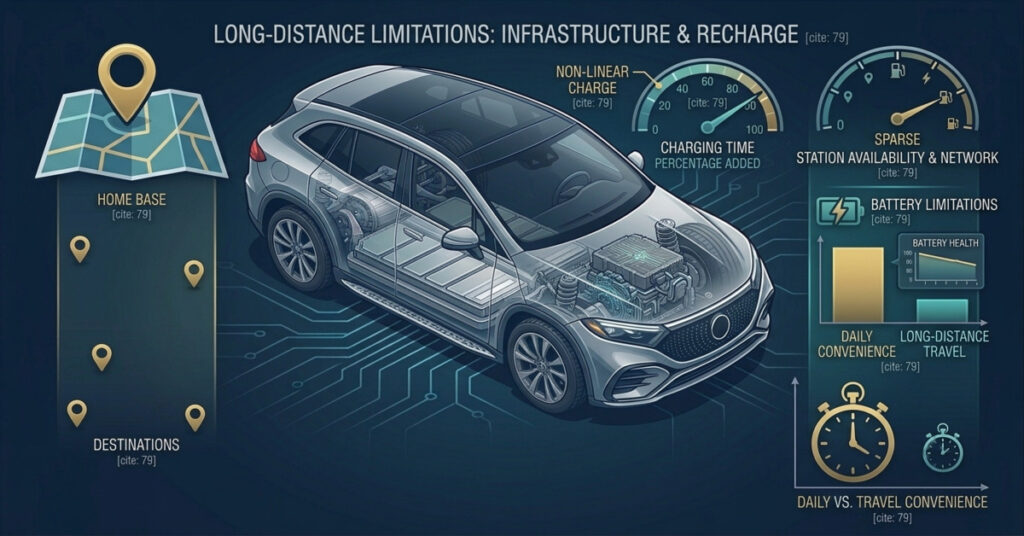
One common issue with electric vehicles is that they are not always easy for long trips. Electric cars can work well in cities, but long-distance travel can be harder.
Trip planning becomes important
With electric vehicles, drivers need to plan their trip in advance. They must check where charging stations are available along the way. If charging infrastructure is weak, it becomes harder to travel freely. This can reduce comfort compared to petrol cars.
More stops during travel
On long journeys, an electric car may need several charging stops. Each stop takes time because the EV battery needs to recharge. Even with fast chargers, it is still not as quick as fuel refilling.
This can make travel feel longer and less simple. Because of this, many drivers feel range anxiety during long trips, especially if chargers are far apart or busy.
9. Resale Value Uncertainty
Another concern with electric vehicles is resale value. When people buy electric cars, they are not always sure how much they will be worth later.
Why resale value can drop
The main reason is the EV battery. Over time, it becomes weaker due to battery degradation. When this happens, the driving range (vehicle range) becomes shorter. Buyers of used electric cars often worry about battery condition. If the battery is old, the price usually goes down.
Fast changes in technology
Electric vehicles are improving very quickly. New models come with better range, faster charging, and improved charging infrastructure support. Because of this, older cars lose value faster.
Battery replacement concerns
If a car may need battery replacement, buyers may avoid it or offer a lower price. This makes resale value less predictable compared to petrol cars.
So, Should You Buy an Electric Car?
Choosing electric vehicles depends on your needs. Electric cars are not perfect, but they can still be a good choice for many people.
When electric cars are a good choice
Electric vehicles are a good option if you mostly drive in the city. Short trips use less energy, so the EV battery works well. If you have home charging and nearby charging stations, daily use becomes easier. Good charging infrastructure also helps reduce problems during travel.
When petrol cars may still be better
Electric cars may not be the best choice for long trips. Limited driving range (vehicle range) and weak charging infrastructure can create problems. Drivers may also feel range anxiety if chargers are far apart or busy. In these cases, petrol cars are still more simple and fast to use.
Final thought: What Are the Disadvantages of Electric Vehicles?
Electric vehicles are improving every year, but issues like battery degradation, charging time, and battery replacement still matter. It is important to choose based on your daily driving needs.
FAQs: Disadvantages of Electric Vehicles
Q: What is the biggest disadvantage of electric cars?
The biggest disadvantage of electric cars is limited driving range and long charging time. Many EVs cannot travel as far as petrol cars, and charging takes much longer than refueling.
Q: What are the negatives of electric cars?
Electric cars can have high upfront costs, limited charging stations, long charging times, and expensive battery replacement. Battery performance can also reduce over time.
Q: What is the 80% rule for EV?
The 80% rule means it is better to charge an EV battery only up to 80% for daily use. This helps protect the battery and extend its lifespan.
Q: Why are people so negative about electric cars?
People are negative about EVs mainly because of charging delays, limited range, high cost, and lack of charging stations in many areas.
Q: Is an electric car unhealthy?
Electric cars are not unhealthy for drivers. In fact, they produce no exhaust smoke while driving, which helps reduce air pollution and improves air quality.
Q: What are the risks of electric cars?
The main risks include battery fire risk (rare), high repair costs, limited charging access, and battery degradation over time.
Q: Are electric vehicles bad for the economy?
Electric vehicles are not bad for the economy. They can reduce fuel imports and create new jobs, but they may also affect traditional fuel and engine industries over time.